
At some point when a child is in grade school, they may come to you with a request: they want a bigger bed.
Maybe they’ve outgrown their single mattress, maybe their friends all seem to have larger beds, or maybe they simply want to feel a little more grown-up.
Whatever the reason, it’s a question worth considering, since it can help ensure your child gets the good night’s sleep they need to thrive.
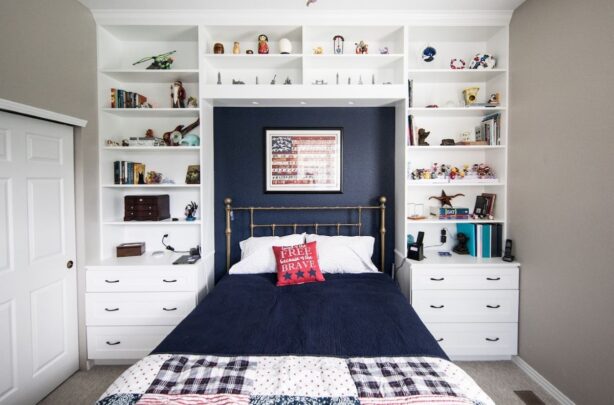
But, sometimes you may be concerned about whether a bigger bed will fit in their room.
While every house is different, switching from a single to a double bed is often more manageable than you might expect.
The key is to make sure that you carefully measure and evaluate your available space before making a final decision.
If you’re considering upgrading your child’s bed from a single to a double, keep these tips in mind.
Why Kids Start Asking for Bigger Beds
While kids may ask for a bigger bed partly because it makes them feel older and cooler, there are other important reasons to consider upgrading.
As children grow, their sleeping needs change. A single bed that felt spacious in elementary school can start to feel cramped after a growth spurt or two.
Taller kids may find themselves starting to hang off the edge of the mattress, while active sleepers may simply want more room to move around comfortably.
For teenagers especially, quality sleep is incredibly important to their physical and mental development.
If a child regularly feels cramped at night, their request for a larger bed may be a practical one worth consideration.
Measure First, Decide Later
Before browsing bed frames or comparing mattress sizes, take some time to head to your child’s room with a tape measure.
While you’ll need to see if your child’s room has the space for a double bed, that’s not the only consideration.
You’ll also need to ensure they have enough space to move comfortably around the room, open doors fully, and access closets and dressers without constantly navigating around furniture.
One of the easiest ways to visualize the change is to mark the dimensions of the potential new bed on the floor using painter’s tape.
Seeing the footprint laid out in the room provides a much clearer picture than trying to imagine it.
Sometimes you’ll discover the bed fits easily. Other times it becomes obvious that the room would feel crowded.
Either way, taking the time to see exactly how much space the bed will take up will make your final decision much easier.
Consider Alternatives to a Standard Double
When you’re worried about having enough room for a bed upgrade, don’t think your only options are a single or a standard double.
There are ways of fitting a double mattress to a smaller bedroom that can give your child the extra room they need to sleep comfortably, even if space is at a premium.
For example, a small double, which is slightly narrow than a standard double, can make a surprising difference in the spaciousness of your child’s room.
A sleek, low-profile bed frame can also help maximize space when upgrading your child’s bed.
Or, consider using a storage bed with built-in drawers to eliminate the need for additional furniture.
When space is limited, choosing the right style can be just as important as choosing the right size.
Think About What the Room Is Used For
Adding a larger bed often means moving something else out of the room.
For some kids, that’s not a problem. If the bedroom is mainly used for sleeping and relaxing, they may be happy to sacrifice a little floor space in exchange for a bigger bed.
For others, their bedroom might serve multiple purposes.
It could be where they do homework, build Lego creations, play video games, practice hobbies, or spend time with friends.
Before deciding to switch from a single to a double, think about how your child actually uses their room on a daily basis.
That double bed may be worth it if it improves your child’s comfort without disrupting the activities that matter most.
But, if it means losing the space to enjoy their room the way they want to, they may decide they’re happier keeping a single bed.
A Good Layout Makes a Big Difference
Furniture placement can have a surprisingly large impact on how spacious a room feels, and that’s important if you’re putting a bigger bed into a small bedroom.
For example, placing a double bed against one wall or in a corner often frees up more usable floor space than positioning it in the middle of the room.
Keeping pathways clear between the door, closet, and window also helps the room feel more open.
Look for opportunities to use vertical storage, wall shelving, and under-bed storage to reduce clutter elsewhere in the room.
With a carefully planned layout, a double bed can fit comfortably into the smallest bedrooms, without making it feel overcrowded.
When a Double Bed Isn’t the Best Choice
While many small bedrooms can accommodate a double bed, some simply can’t.
If adding a double bed means blocking access to storage, making it difficult to move around the room, or leaving almost no usable floor space, it may not be the right choice.
A well-designed single bed can still provide plenty of comfort, especially when paired with practical storage solutions and more mature bedroom décor.
There’s also nothing wrong with waiting. As children grow and family needs change, a larger bed may make more sense in the future.
Remember, nobody benefits from a bigger bed if it results in a room that’s no longer functional.

A double bed isn’t automatically too large for a child’s bedroom, even if the room seems small at first glance.
In many homes, it can work surprisingly well, with a little planning and the right furniture choices.
Just remember to take your time to map out exactly where the bed will go, how much room will be left once it’s in place, and whether some smart storage could help minimize the bigger bed’s impact.
If the room can comfortably support a larger bed, it may be a reasonably-priced upgrade that your child will enjoy for years.
If not, a good-quality single bed remains a perfectly practical choice until your child’s need for something bigger becomes an essential.