
Moving a queen size mattress sounds simple enough, until you’re trying to squeeze it around a tight corner or carry it up a narrow staircase.
Because mattresses are bulky, even a lightweight one can be awkward to move.
Without a little planning, it’s easy to end up with scraped walls, sore backs, or a mattress that’s much harder to maneuver than you expected.
Whether you’re moving into a new home or simply rearranging a bedroom, these tips can help make the job of moving a queen size mattress much easier.
Measuring Doorways, Stairwells, and Hallways First
Before anyone starts lifting, take a few minutes to measure the route your mattress will need to travel.
Check doorways, hallways, staircases, and any tight corners along the way. Remember that you may need to turn the mattress around corners as well.
If a doorway is especially tight, removing the door from its hinges can sometimes give you the extra clearance you need.
And, don’t forget about the interference that stair railings and light fixtures may cause. They can easily be damaged if you don’t consider their placement.
A little measuring beforehand can save a lot of frustration once the mattress is in your hands.
Lifting and Carrying the Mattress Safely
A queen mattress isn’t usually extremely heavy, but its size and awkwardness can make it difficult for one person to carry safely.
In general, at least two people should be involved when moving a queen-sized mattress.
One person should support each end of the mattress, communicating before turning corners or going up and down stairs.
Lift with your legs rather than your back, and if the mattress starts slipping or catches on something, stop and adjust instead of trying to force it through.
Gloves with good grip can help ensure you keep your hold. Moving straps or a mattress sling may also be useful when the mattress is particularly heavy or the route includes tight turns.
If you’re moving a particularly heavy mattress or navigating several flights of stairs, hiring professional movers may be well worth the cost.
Protecting the Mattress During Transport
Moving day can be hard on a mattress, since its soft cover can often be damaged easily.
A mattress bag or heavy-duty plastic cover can help protect it from dirt, moisture, and tears while it’s being carried through the house or transported in a moving truck.
It’s also important to keep the mattress flat whenever possible. While many memory foam mattresses can flex slightly, folding or sharply bending a mattress can damage its internal support, especially if it contains springs or coils.
Avoid stacking heavy furniture or moving boxes on top of the mattress during the move as well, especially if it will be in the moving vehicle for a long period of time.
Choosing the Right Bed Frame Before Setup
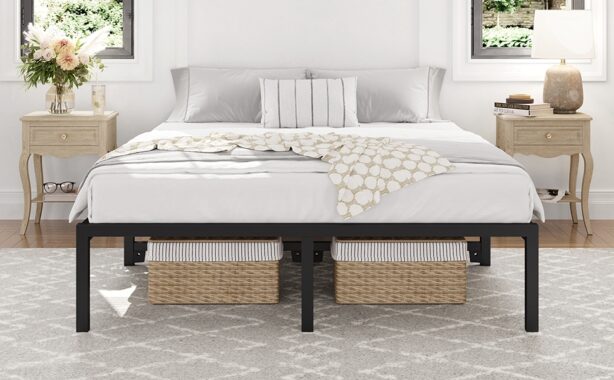
Before placing the mattress in your new room, check that the bed frame is designed to support it properly.
Some mattresses work best on platform beds, while others require extra slats or a box spring.
Ideally, because of their size, queen beds should also have a sturdy center support to prevent sagging over time.
Platform beds without sufficient center support can place additional stress on the middle of the frame.
Check that all required supports are installed securely and that the frame’s rated capacity is suitable before putting the mattress into place.
Taking a few minutes to tighten bolts, check the slats, and make sure everything is level can help extend the life and comfort of both your mattress and your bed frame.
Positioning the Bed in the Room
Once a queen mattress is in place, it’s likely not something you’ll want to move again anytime soon.
So, before setting up the bed, think about how the room will function.
Make sure there’s enough space to walk comfortably, open closet doors and dresser drawers, and change the sheets without squeezing between the wall and the mattress.
If possible, position the frame so that it does not block drawers, heating vents, electrical outlets, or the main path between the doorway and closet.
If you’re furnishing a smaller bedroom, placing the bed before bringing in the rest of the furniture often makes arranging the room much easier.
Queen Mattress Moving Checklist
| Step | What to Check | Why It Matters |
| Measuring the Route | Doorways, turns, stairs, railings, and mattress thickness | Identifies areas where the mattress may need to be rotated |
| Lifting | Weight, grip, visibility, and number of helpers | Reduces the risk of losing control or straining the body |
| Transport Protection | Mattress bag and secure vehicle placement | Protects against dirt, moisture, abrasion, and pressure |
| Foundation | Manufacturer-approved support and centre reinforcement | Helps prevent instability, sagging, and warranty issues |
| Room Setup | Clear paths, level frame, and accessible doors or vents | Keeps the finished bedroom practical and safe |
Frequently Asked Questions
What Size is a Queen Mattress?
A standard queen mattress measures 60 by 80 inches, or 152 by 203 cm. Measure doorways, stairwells, hallways, and tight turns before moving day, since the amount of clearance needed will depend on the mattress thickness, flexibility, and the layout of the route.
How Many People Does it Take To Move a Queen Mattress?
At least two capable adults should move a queen mattress, since the size and shape make it difficult to balance and maneuver alone. A particularly heavy mattress or a route involving stairs and tight turns may require additional help or professional moving equipment.
Can a Queen Mattress Be Bent to Fit Through a Doorway?
A mattress can usually be tilted or carried at an angle, but it should not be sharply bent or folded unless the manufacturer confirms that it won’t cause damage. Be especially careful with innerspring and hybrid mattresses that contain coil systems.
Does a Queen Mattress Need a Special Bed Frame?
A queen mattress should be placed on a foundation or frame that meets the manufacturer’s support requirements. Depending on the model, this may include center reinforcement, center legs, closely spaced slats, or a solid platform.
How Far Should a Queen Bed Be From the Wall?
There is no required universal distance between a queen bed and the wall. Position it according to the frame design, and leave enough space around the accessible sides for walking, changing bedding, and opening nearby doors or drawers.
Moving a queen size mattress isn’t necessarily a hard process, but it does benefit from a little extra planning and preparation.
Take your time when deciding on your route and planning your placement, and you’ll soon be relaxing in comfort!