
Your little one’s early childhood years, which are generally thought of as being roughly from the ages three and five, are a time of enormous growth.
Your child is becoming more independent, asking more questions, and starting to explore the world in a much more intentional way.
A toddler might pick up a toy because it catches their attention, and play with it for a few minutes with interest.
A preschooler may take that same toy apart, investigate how it works, and decide that the pieces can be used to build something completely different.
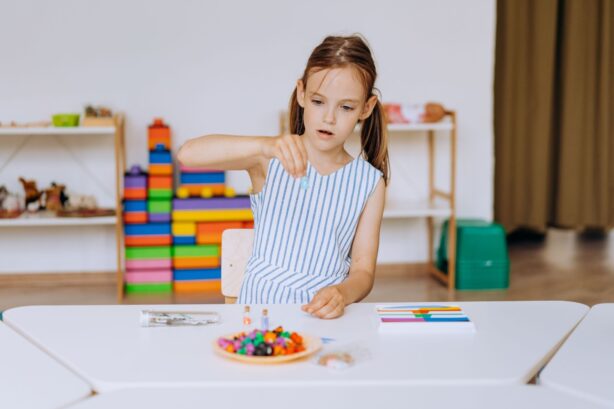
That change is a big part of early childhood development.
Children aren’t simply reacting to what happens around them anymore. They’re making predictions, testing ideas, solving problems, and coming up with their own explanations.
That’s why fostering creativity and curiosity in early childhood is so important. These skills aren’t just useful for art projects or imaginative play.
They help children become confident thinkers who are willing to ask questions, try new things, and keep working when something doesn’t go as planned.
And, encouraging creativity and curiosity doesn’t require expensive toys or complicated activities. In fact, some of the best opportunities happen during everyday moments.
Why Curiosity Matters in Early Childhood
If you’ve spent much time with a preschooler, you’ve probably heard them ask plenty of questions.
“Why is the sky blue? Where did the bug go? Why did my tower fall down? What happens if I put this in the water?”
It can be tempting to give a bit of a dismissive answer, especially when the questions keep coming. However, curiosity gives children a reason to investigate the world around them.
When a child wonders why a block tower keeps falling, for example, they may start experimenting with different solutions.
They might use larger blocks at the bottom, make the tower shorter, or try building it on another surface.
Without realizing it, they’re learning about balance, cause and effect, and problem-solving.
So, instead of always answering a question immediately, try turning it back to your child.
You might ask, “What do you think? Why do you think that happened? What could we try? How could we find out?”
While it’s fine to sometimes give your child the easy answers they’re looking for, it can also be helpful to let your little one investigate on their own to find their own conclusions.
How Creativity Develops in Preschoolers
Too often, adults may think that creativity only applies to artistic pursuits, like drawing a picture.
The truth is that creativity means so much more than that to a child.
A cardboard box can become a rocket. A blanket can become a tent. A pile of sticks can become a construction site. A collection of blocks can become almost anything a child imagines.
This type of imaginative play is an important part of creative thinking.
Children learn that materials don’t necessarily have only one purpose, and that there can be more than one solution to a problem.
For example, a child might discover that a tower keeps falling over. Instead of giving up, they may try a wider base, different blocks, or a completely different design.
That process matters more than the finished project.
Children are learning to experiment, change their approach, and try again. Those are skills they can continue using as they grow.
Helping Kids Develop Curiosity and Creativity in Early Childhood
If you want to help build your child’s innate sense of curiosity, and encourage their creative instincts, these are a few ways to do that:
Give Preschoolers Open-Ended Materials
One of the simplest ways to encourage creativity is to provide materials that can be used in lots of different ways.
Blocks, playdough, paper, cardboard, fabric scraps, wooden pieces, containers, sticks, stones, and recycled household items can all inspire open-ended play.
Rather than telling your child exactly what to make, give them the materials and see what they come up with.
The things your child creates might surprise you, whether it’s a house, a bridge, a robot, or something that doesn’t have a name at all.
The freedom to explore is valuable, because it allows children to make decisions and experiment without worrying about getting a right answer.
Let Children Experiment Without Taking Over
When your child is struggling with something, it can be difficult to watch without stepping in.
Maybe their puzzle isn’t working. Maybe their tower keeps falling. Maybe they’re frustrated because their drawing doesn’t look the way they imagined.
Of course, there are times when children might need and ask for help.
However, giving them a few extra moments to work through a problem can encourage independent thinking.
Instead of immediately showing them what to do, try asking some questions.
“What could you change? Do you think that piece might fit somewhere else? What happened when you tried that? Is there another way you could do it?”
This approach gives your child support without taking control of the entire activity.
And, even more importantly, it teaches them that making mistakes is a part of learning.
Follow Your Child’s Interests
Young children often become intensely interested in something for a period of time, whether that lasts for days, weeks, months, or even years.
Maybe it’s dinosaurs. Maybe it’s insects, construction vehicles, space, cooking, or collecting rocks.
Those interests can become excellent opportunities for fostering curiosity in preschoolers.
If your child is interested in bugs, you could look for them outside, compare their sizes, draw pictures, read a book about insects, or even create a temporary insect habitat.
If they’re currently fascinated by water, provide cups, containers, spoons, funnels, and other safe objects that allow them to experiment with pouring and transferring water.
Remember that you don’t have to create a fancy learning opportunity every time your child becomes interested in something new.
Just paying attention to your child and providing opportunities to explore will help them thrive.
Choose a Preschool That Supports Curiosity
The environment children spend time in can have a huge impact in how their creativity and curiosity develop.
When you’re choosing an early childhood program, look beyond the toys and activities listed on the website. Pay attention to how educators interact with children.
Do children have opportunities to choose activities? Are materials accessible to them? Can they explore their own interests? Do educators ask questions instead of immediately providing answers? Is there time for imaginative and unstructured play?
These details can tell you a lot about how a program approaches early childhood learning.
One of the top facilities for educational childcare in Cranbourne explains that you should consider whether a center provides an environment where children can explore, experiment, and follow their interests.
The key is to look at the quality of the toys, rather than their quantity, while also confirming that teachers actively engage with the kids in their charge.
When your child has the ability to learn and grow independently under proper supervision, their creativity and curiosity will flourish.
Make Everyday Activities Part of Learning
While there are all kinds of amazing educational toys available for building creativity and curiosity, some of the best learning opportunities come from everyday activities.
Cooking, for instance, is a simple way to introduce your child to concepts like counting, measuring, comparing, and predicting.
Letting your child make some choices in the dishes you cook together can help them develop an idea about how certain items can be combined in different ways.
Gardening can encourage children to observe changes over time.
They can look at seeds, examine soil, watch plants grow, and start to think about what plants need to survive.
The key is to ensure your child shows interest in those everyday activities, so that you can start to let them work with you to learn on their own.
Try Simple Creative Activities for Preschoolers
There are plenty of easy activities that can help your little one get creative in their own way.
The trick is to choose the ones that leave room for children to make their own choices.
Here are a few simple ideas to consider:
- Building something from cardboard boxes and recyclying.
- Creating pictures with leaves, sticks, or other natural materials.
- Making up stories about toys or stuffed animals.
- Mixing colours with washable paint.
- Building different structures with blocks.
- Making pretend meals with playdough.
- Creating an obstacle course.
- Exploring what objects sink or float.
- Making music with simple household objects.
- Drawing a picture and then creating a story about it.
Remember that to truly build your child’s sense of curiosity and creativity, you shouldn’t be telling them what they’re creating.
Let their own imagination guide them, so that they can develop their own imagination.
Don’t Be Afraid of Unstructured Play
Children need time when nobody is telling them exactly what to do.
It can be tempting to fill a preschooler’s day with activities, outings, sports, screens, and organised programs.
However, unstructured play gives children an opportunity to decide what interests them.
Your child might initially complain that they’re bored. Then, after a few minutes, they may start building a fort, making up a game, collecting objects, or creating an elaborate pretend story.
You don’t have to solve boredom immediately.
Instead, give your child an opportunity to generate their own ideas, instead of always waiting for an adult to entertain them.
Praise the Creative Process
It’s natural to want to tell your child they painted a beautiful picture, or that they used their intelligence to solve a problem.
But, there are specific comments about the process that can give children more useful feedback that encourages them to keep exploring.
Try saying things like: “I noticed you tried three different ways to make that tower stand. You changed your idea when the first one didn’t work. You found a different way to use those blocks. You worked on that for a really long time.”
These comments draw attention to the fact that persistence, experimentation, and problem-solving are skills worth developing.
At that point, children can start to understand that creativity isn’t about getting everything right on the first try. It’s about exploring possibilities and figuring things out.
Fostering creativity and curiosity in early childhood can have a lifelong benefit in the way they interact with the world.
The preschool years are about much more than getting ready for school. Children are developing the habits that will shape how they approach learning for years to come.
When you give your kids room to ask questions, experiment with ideas, and find their own solutions, you’re helping them develop something that goes far beyond creativity.
You’re helping them become curious, confident learners who aren’t afraid to take chances to find the answers they’re looking for.