
If you’re a mom, you probably don’t need anyone to tell you how quickly floors can go from clean to a complete disaster.
Between muddy shoes, spilled drinks, wet boots, pets, food crumbs, and the other inevitable messes kids make, your floors take a lot of abuse.
That’s when the right commercial floor mats can actually come in handy at home.
Although they’re designed for demanding environments like restaurants, gyms, warehouses, and retail stores, many of the same features that make them useful in commercial spaces can be helpful for busy families.
A good floor mat can protect your flooring, improve traction, make cleanup easier, and provide a more comfortable surface in areas where you spend a lot of time standing.
The key is choosing the right type of floor mat for the area you’re trying to protect.
How Floor Mats Can Help in a Busy Family Home
A floor mat is a great way to keep your floors looking good, but they can do much more than that.
The right mat can help prevent slips, catch dirt and moisture before it spreads through the house, and protect your home’s flooring from everyday wear and tear.
This can be especially helpful in high-traffic areas, the entryway after a rainy school morning, the kitchen after dinner, or the laundry room where everyone tends to wear wet shoes.
High-quality commercial floor mats can also make standing more comfortable.
If you spend a lot of time preparing meals, washing dishes, folding laundry, or helping kids with homework at a counter, a cushioned rubber mat can take some pressure off your feet and legs.
Match the Mat to the Mess
There isn’t one perfect floor mat that will work in every room in your house. You should choose your mat based on what happens in a particular space.
Here are some tips on choosing the right mat for the right room:
Kitchen
Your kitchen may not have the same demands as a restaurant kitchen, but there are some obvious similarities.
Most kitchens will have to handle spills from water, food, grease, and crumbs as part of the daily routine.
A drainage mat with an open design can be useful in areas where water or other liquids are common.
The openings allow liquid and small debris to pass below the walking surface while providing traction underfoot.
For a mom who spends plenty of time standing at the sink or stove, a thicker rubber mat can also provide some cushioning and make long periods of standing more comfortable.
Mudroom or Entryway
Your home’s entrance is the first line of defense against everything your family tracks inside.
Rain, snow, mud, salt, leaves, and dirt can quickly make their way across your floors when kids are rushing in after school or everyone is trying to get out the door on a busy morning.
A durable entrance mat can catch a large amount of that moisture and debris before it reaches the rest of your home.
If you live somewhere with snowy winters, choosing a mat that can handle plenty of moisture is particularly important.
Laundry Room
Laundry rooms are another place where water can become a problem. A rubber or PVC mat can provide a more comfortable surface in the room, while helping protect the floor from small spills or leaks.
A drainage-style mat may also be useful if your laundry area regularly gets wet.
Just remember that a mat shouldn’t be used as a permanent solution if your washing machine, hoses, or plumbing have leaks.
Garage or Workshop
If your garage doubles as a workshop, storage area, or family project zone, it can benefit from the same durability that makes commercial mats useful in warehouses and workshops.
Thick rubber mats can provide cushioning when you’re standing for long periods, while also helping protect the floor from dropped tools, dirt, and general wear.
They’re also useful if your kids’ bikes, sports equipment, or outdoor toys seem to migrate into the garage on a regular basis.
Benefits of Interlocking Drainage Mats
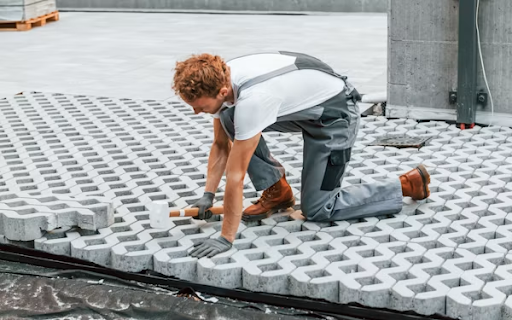
An interlocking drainage mat is particularly useful in areas where water, grease, or other liquids are common.
Its open design allows liquids and small debris to pass underneath the walking surface, rather than leaving them sitting on top of the mat.
That can make these mats useful for areas such as mudrooms, garages, laundry rooms, outdoor spaces, or particularly messy utility areas.
The interlocking design makes these mats even more versatile. Instead of buying one mat, you can connect individual tiles to cover the area you need.
If one section becomes damaged or worn, you’ll likely only need to replace that section, rather than the entire mat.
You can also expand the mat later if you need to move it to a different area.
Which Mat Material Is Best?
The material you choose makes a big difference in how a mat performs.
Rubber is one of the most versatile choices. It’s durable, provides good traction, and offers some cushioning.
These qualities make rubber mats useful in kitchens, garages, workshops, mudrooms, and other high-traffic areas.
PVC is another practical choice, particularly for wet areas. PVC drainage mats are moisture-resistant, relatively easy to clean, and designed to allow water to drain away.
Nitrile rubber can be worth considering if you’re dealing with oils, grease, or certain cleaning chemicals.
It’s commonly used in demanding commercial environments, because it offers greater resistance to these substances than standard rubber mats.
Keep in mind that depending on your family’s needs, you don’t necessarily need the most heavy-duty option available.
Instead, think about what type of dirt and wear your mat will actually be exposed to, and choose accordingly.
What to Look for When Buying a Floor Mat
It’s easy to choose a mat based on appearance or price, but a few practical details can make a much bigger difference once you start using it.
Here are some features to look for:
- Good slip resistance, particularly in areas that get wet
- Enough thickness to provide the comfort you want when standing
- Drainage openings if you’re dealing with regular moisture
- Easy cleaning, because kids aren’t the only ones making messes
- Resistance to grease or chemicals if you’ll be using the mat in a garage or workshop
- Interlocking edges if you need to cover a large or irregular area
- Enough weight and grip to prevent the mat from shifting
- The right dimensions for your space
Don’t forget to measure the area before making a final decision.
A mat that’s too small may not provide enough protection, while one that’s too large may create an awkward trip hazard.
How to Keep Your Mats Clean
Even the best mat won’t do much for your floors if it’s covered in dirt and debris.
For everyday cleaning, start by shaking, sweeping, or vacuuming loose dirt from the surface. Many rubber mats can then be rinsed with water and cleaned with mild detergent.
Drainage mats need a little extra attention. Every so often, lift the mat and clean underneath it.
Dirt, food, mud, and moisture can collect below the surface, particularly in an entryway or other high-traffic area.
If you’ve ever moved your couch and discovered the mysterious collection of crumbs underneath it, you’ll understand why cleaning under a drainage mat is important.
Allow the mat to dry thoroughly before putting it back in place.
This is particularly important for mats in enclosed areas, where trapped moisture could create issues.
Common Floor Mat Buying Mistakes
One of the biggest mistakes is choosing a mat that’s simply not designed for the conditions it’s going to face.
A thin decorative mat might look great in an entryway, but it may not hold up well when five people are walking over it every day with wet shoes.
In the same way, a smooth mat that works perfectly well in a dry room may not be the safest option beside a sink or in a muddy entryway.
Another common mistake is choosing a mat with edges that curls, slides, or doesn’t lie flat. A mat that lifts at the edges can actually create a tripping hazard rather than preventing one.
Finally, always make sure you carefully measure your room and your mat before you make your purchase.
Large gaps can leave your floor exposed to unnecessary wear, while an oversized mat can be difficult to position and clean.
When Should You Replace a Floor Mat?
Even the most durable commercial floor mats eventually wear out.
If you’re wondering if your mat needs replacing, look for a surface that’s becoming smooth, edges that are curling, cracks in the material, damaged drainage holes, or a mat that has started sliding around instead of staying securely in place.
It’s important to remember that those signs of wear aren’t just cosmetic problems. They can reduce the mat’s ability to provide traction and protection.
Rather than waiting until a mat completely falls apart, check the ones in your busiest areas periodically.
Replacing a worn mat before it becomes a safety issue is a much better approach.
Your home may not be a restaurant, warehouse, or gym, but some parts of it can certainly feel that busy.
The right floor mat can make a surprisingly useful difference in the places where your family creates the most mess.
Whether you’re trying to keep muddy footprints out of the house, make standing at the kitchen counter more comfortable, or protect your garage floor from everyday wear, choosing a mat based on how you’ll actually use it is the best place to start.
Look at the amount of traffic, moisture, dirt, and wear the mat will need to handle.
Then, consider the material, thickness, drainage, size, and cleaning requirements.
A mat that suits your family’s needs can protect your floors, make cleanup easier, and give you one less thing to worry about when the next inevitable spill happens.
FAQs
Why Use Floor Mats At Home?
Floor mats can protect flooring, improve traction, catch dirt and moisture, and make hard floors more comfortable in high-traffic areas.
They’re particularly useful in kitchens, entryways, mudrooms, laundry rooms, garages, home gyms, and workshops.
Where Can Interlocking Drainage Mats Be Most Useful?
Interlocking drainage mats can work well in areas where water or moisture is common, including mudrooms, garages, laundry rooms, outdoor spaces, and utility areas.
Their open design allows liquids and small debris to drain below the walking surface to help prevent slips and improve comfort while working.
How Often Should I Clean a Floor Mat?
The answer depends on how much use it gets. High-traffic mats may need frequent vacuuming, sweeping, or rinsing, while deeper cleaning can be done as needed. Mats exposed to mud, food, or moisture generally need more frequent attention.
Can Interlocking Drainage Mats Be Expanded?
In most cases, modular interlocking mats can be connected to additional tiles, making it possible to cover a larger area or change the configuration later.
How Long Do Rubber Floor Mats Last?
The lifespan of any mat will depend on the quality of the material, how much traffic the mat receives, and how well it’s maintained.
High-quality rubber mats will generally provide between five to fifteen years of use in a home setting.
Are Rubber Mats Useful For Moms That Stand Often?
A thick rubber mat can provide cushioning and traction, which can make standing for long periods more comfortable.
They’re particularly useful in areas where you regularly cook, wash dishes, do crafts, or work on other household tasks while standing.