
Wall sconces can make a home feel finished, but they are also one of the easiest fixtures to place incorrectly.
When sconce height or spacing is off, you can’t help but notice it.
You may find yourself dealing with things like glare at eye level, awkward “floating” lights, shadows in hallways, or a mirror area that somehow still looks dim.
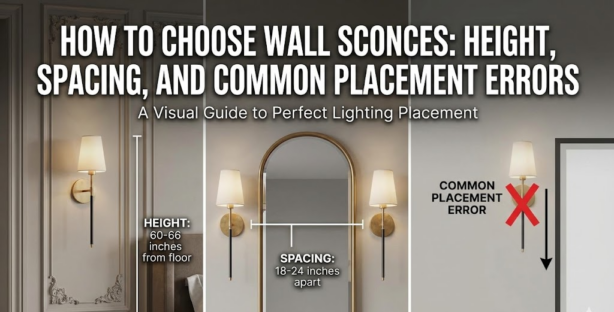
If you’re feeling overwhelmed trying to place sconces, follow this guide for sconce height and spacing, as well as learning about the placement mistakes that cause the most regret.
Make sure to follow this quick checklist before you drill holes or hire an electrician to ensure your sconces give your home the finished look you want.
What Looks You Can Create With Wall Sconces
Sconces work best when you want one of these looks:
- More Visual Depth: Lighting at eye level makes rooms feel less flat.
- Better Face Lighting: Sconces can help give better lighting at mirrors and vanities.
- Cleaner Hallways: A sconce can reduce ceiling glare and make walkways feel more even.
- Highlighting: Carefully placed lighting helps highlight art, textured walls, fireplaces, and other stand-out features.
If your main goal is to make your room brighter, a sconce alone rarely does that.
It should be part of a bigger plan that also incorporates overhead light or properly placed lamps.
The Baseline Height Rule That Works in Most Homes
A practical general starting point when placing sconces is to mount most sconces so the center of the fixture sits around 60-66 inches from the finished floor.
This range works well because it keeps light close to eye level without putting the fixture directly in your line of sight.
From this starting point, you can make minor adjustments to height based on the room’s purpose and the sconce design.
When To Go Higher
- In taller-ceiling rooms, where a slightly higher mounting looks more proportional
- When the sconce is tall and you want the light source above eye level
- In staircases, where fixtures should align visually along the rise of the stairs
When To Go Lower
- In cozy spaces where you want a more intimate glow
- For bedside reading sconces, where reach and switch access matter
- When the sconce is short and would look odd mounted too high
Spacing Basics: How Far Apart Should Sconces Be?
Spacing depends on light output, wall length, and the look you want. But there are reliable starting targets.
General Spacing Starting Point
- Places sconces about 6-8 feet apart for most hallways and longer walls, assuming average brightness sconces.
- If the sconces are decorative and low output, you may need closer spacing to avoid dark gaps.
- If the wall is short, it may look better to use one well-placed sconce than two cramped ones.
How To Prevent Awkward Spacing
Instead of measuring only in feet, step back and visually divide the room into segments.
If a sconce is too close to a doorway or a corner, it can look like it was placed wherever wiring was easiest, not where design makes sense.
Placement Based on Room and Location
The room you’re placing your sconces in can have an effect on where you should place your lighting.
Try to follow these general rules for best placement:
Hallways
- Keep height consistent from sconce to sconce so the hallway looks clean.
- Space evenly to avoid bright and dark spots.
- Choose diffused designs to reduce glare in narrow corridors.
Living Rooms and Feature Walls
- Consider the area your sconce is meant to highlight, whether it’s a seating area, art, or a fireplace wall.
- Mounting height should align with what you want lit, so don’t limit yourself to traditional spacing rules.
- When framing artwork or other feature items, keep your symmetry intentional.
Bathrooms
- Remember that when placing bathroom sconces, the goal is to light the face, not to provide decorative lighting.
- Place sconces close enough to the mirror edge that light reaches the face from both sides.
- Use diffusers to prevent harsh glare in reflective mirror surfaces.
Bedrooms
- Bedroom sconces are often placed as reading lights for the bedroom.
- Mount your sconces with useability in mind; switches should be reachable from bed.
- Aim light toward the reading zone, not directly into eyes.
- If the bed is tall, adjust height upward so the light sits above shoulder level when seated.
Common Placement Errors and How To Avoid Them
Error 1: Mounting Too High Because the Ceiling is Tall
When sconces sit too high, they stop doing their job and start looking like random wall ornaments.
Fix: Keep light close to the human scale of the room, then adjust only slightly for ceiling height.
Error 2: Putting the Light Source at Eye Level
Exposed bulbs or clear glass at eye level create glare.
Fix: Choose diffused designs or mount slightly higher so the brightest point is not in your direct sightline.
Error 3: Ignoring Door Swings and Traffic Flow
A sconce that gets blocked by an open door looks wrong and wastes light.
Fix: Check door swing arcs before final placement.
Error 4: Spacing Based on What Fits, Not What Lights the Wall Evenly
Two sconces too far apart create a gloomy center section.
Fix: Move sconces closer, add a third light, or use one stronger feature sconce and layer with lamps.
Error 5: Choosing the Wrong Beam Direction
Up-only or down-only sconces can look dramatic, but they may not provide usable light.
Fix: Decide if you want ambiance, wall wash, or task light, then pick the beam pattern accordingly.
A Quick “Before You Install” Checklist
- Stand where people will walk or sit and make sure the sconce won’t glare at eye level.
- Confirm the height works with furniture, whether that’s headboards, console tables, mirrors, or artwork.
- Check door swings and cabinet openings before committing to placement.
- Mark spacing with painter’s tape and view it from multiple angles.
- Consider adding dimmers. Sconces often look best when they can shift from bright to soft.
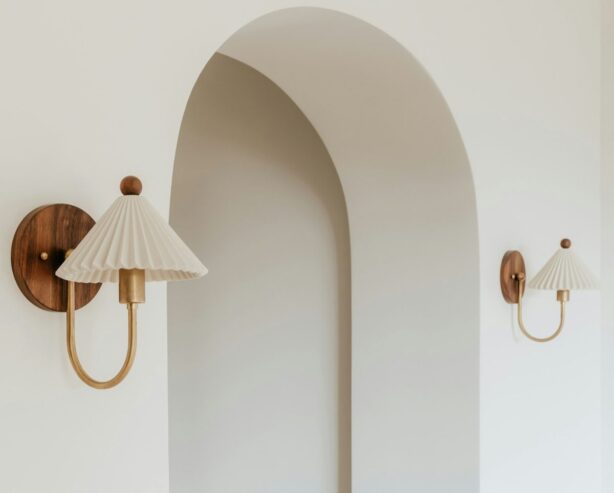
Choosing a Sconce Style That Matches the Rest of the Home
Sometimes the most challenging part of adding wall sconces isn’t just the style.
With height, spacing, and room design in mind, selecting the perfect style becomes much easier.
Remember that sconces should coordinate with your ceiling lights, not compete with it.
If you’re feeling overwhelmed by the many options available, browsing online lighting shops can help you find the best styles.
For example, you might want to see what Seus Lighting offers for your home and how it could help you create the look you want.
With proper the right preparation, forethought, and placement, wall sconces become one of the simplest upgrades that changes how your rooms feet.