
Most parents dream of enjoying a gorgeous yard when the weather gets nicer, but having time to maintain it is another thing.
As a busy parent, you want an attractive yard just as much as anyone else.
But, between jobs, kids, school events, and daily chores, keeping your yard looking great probably isn’t a top priority.
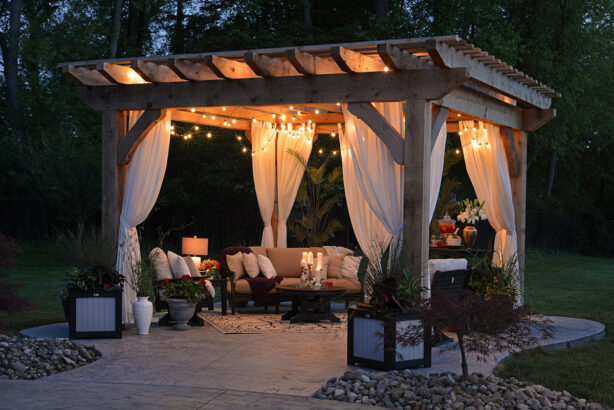
Fortunately, there is a solution that’s becoming more and more popular across North America: low-maintenance landscaping.
With proper initial planning and the right design, your yard can look great while almost maintaining itself; no weeding, watering or trimming required.
Wondering how to make that dream a reality?
Come learn more about the benefits of low-maintenance landscaping, and ways you can design your yard to be as hassle-free as possible.
What You’ll Learn:
- Reasons to Consider Low-Maintenance Landscaping
- Choosing Plants that Fit Your Landscape
- Hardscaping Ideas that Cut Maintenance Time in Half
- Smart Ways to Save Water and Time
- Tips for Keeping Maintenance Minimal
Reasons to Consider Low-Maintenance Landscaping
The average homeowner spends roughly 70 hours each year mowing and maintaining their lawn.
That’s more than a full work week devoted to grass alone, not including chores like cleaning garden beds, trimming, edging, and seasonal cleanup.
A busy parent knows that finding extra time in a day is already a challenge.
Weekends and evenings are often the only opportunities to relax or spend time together, yet outdoor spaces frequently demand attention instead of offering enjoyment.
Low-maintenance landscaping is a way to change that.
A top company for landscaping in Raleigh has mentioned that there’s been a major shift in recent years towards yards that don’t require hours of work to look their best.
And, even better, low-maintenance landscaping can also help lower water costs, increase curb appeal, and add value to your home.
Recent data has shown that a well-designed yard can give you up to a 20% return on your initial investment if you decide to sell your home.
Choosing Plants That Fit Your Environment
It’s pretty common for homeowners to pick plants for their yard based on the appearance alone.
But, plants can be surprisingly picky about what they need to thrive, and some varieties may need more care to thrive than you want to invest.
Plants native to your area, however, are a much more sustainable choice.
Because they are adapted to local climate conditions, soil types, and rainfall patterns, they typically require less water, fertilizer, and maintenance than non-native species.
This means that once they’re established, you’ll be able to enjoy beautiful trees, shrubs, and flowers without the stress of constant maintenance.
Low-maintenance native plants often include drought-tolerant perennials, native grasses, evergreen shrubs, and ground covers.
Grouping plants with similar water needs, often referred to as hydrozoning, will reduce the amount of time you need to spend watering.
Replacing portions of traditional lawn with native plantings and layered foliage can significantly reduce mowing and watering while adding texture and visual interest.
Hardscaping Ideas that Cut Maintenance Time in Half
Hardscaping elements, including patios, decks, stone walkways, retaining walls, and gravel paths play an important role in low-maintenance design.
These features reduce the amount of space that requires mowing, trimming, and seasonal care, while also giving you more areas to enjoy in your yard.
But, it’s important to remember that you need to balance your hardscaping with greenery for a truly appealing yard.
Too much hardscaping can make a yard feel cold or uninviting, while too little may give you constant yard maintenance.
Instead, combine permanent areas with strategically-planned areas of plants, flowers, and other greenery so that you can create an area that feels natural while still minimizing labor.
Larger plant groupings with mature shrubs and trees also reduce maintenance. Fewer edges mean less trimming, and established plants typically require less intervention than multiple small beds.
Smart Ways to Save Water and Time
Watering trees, shrubs, flowers, and your lawn itself can take up a significant amount of both time and money.
But, a properly planned irrigation system can help ensure that doesn’t happen.
Smart irrigation controllers adjust watering schedules automatically based on weather conditions, soil moisture, and seasonal needs.
According to EPA WaterSense trials, these systems can reduce outdoor water use by up to 50 percent, while also saving you the chore of making sure your greenery is getting the water it needs.
Other ways you can save both water and time while maintaining your yard include drip irrigation systems, rain barrels, permeable pavers that reduce runoff, and rain gardens that direct your extra water to plants that need it.
Xeriscaping is another option for homeowners looking to minimize their need for water when maintaining their yard.
This is more aggressive approach to water conservation, that focuses on using drought-tolerant plants and water-conserving irrigation.
Since using as little water as possible for your yard saves time, money, and the environment, it’s worth considering when planning your landscape.
Tips for Keeping Maintenance Minimal
Even a low-maintenance landscape needs a bit of care, but some smart moves can ensure that your maintenance takes up as little time as possible.
These tips can help ensure that your yard will look great in record time:
- Mulch Your Plants: Apply 2-3″ of wood mulch to your tree, shrub, and flower beds, and you’ll minimize weeds and moisture loss. Apply once every year or two as needed.
- Edge Beds Permanently: Proper edging makes your entire yard look well cared for. Install permanent edging between beds and grass to keep your yard looking sharp and defined.
- Keep Gear in Good Condition: Dull mower blades can tear out your grass rather than cutting it neatly, and rusty pruning shears could damage your trees instead of making them look neater. Regularly cleaning and sharpening your tools will keep your yard looking great for longer.
- Tackle Maintenance Seasonally: Break up your maintenance by season to ensure that your yard looks great year-round, without the work becoming overwhelming.
And, if you have the budget for it, keep in mind that professional lawn care services can handle periodic pruning, fertilization, and pest management to help save you even more time.
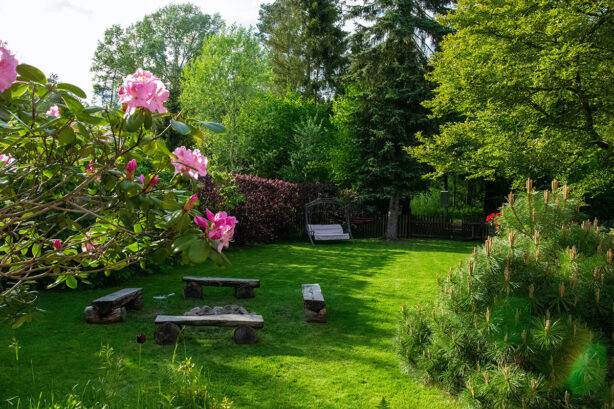
Enjoying a beautifully landscaped yard doesn’t have to take constant time and effort.
With proper planning and the right design, you can have a beautiful yard without the accompanying hours of maintenance.
It’s all about finding the balance between the look you want and the work you want to put into maintaining it.
Whether you start with a single planting bed or a full redesign, low-maintenance landscaping allows you to spend more time enjoying your yard, and less time with upkeep.