
With the rising cost of living, it’s no question that making enough to cover the bills for your family has become challenging as well.
In most households, that means both parents need to work, which makes daycare an essential for many.

But, according to a top daycare in Cheyenne, WY, the benefits of daycare can actually go well beyond simply giving parents the chance to work knowing their little ones are in good hands.
Here are seven benefits daycare can provide your child that you may not have considered.
1. Early Social Skill Building
Children begin reading social cues far earlier than most adults expect.
A daycare setting puts them face-to-face with other kids every single day, which speeds up how fast they learn to take turns, settle small conflicts, and cooperate during group activities.
What makes daycare effective at teaching these lessons is repetition.
Sharing crayons at a table, sitting in a circle for story time, or eating lunch together are all moments that may look ordinary.
But, they’re actually teaching empathy, patience, and cooperation in ways that are hard to replicate at home, with fewer peers around.
2. Stronger Cognitive Growth
Good early learning programs go well beyond babysitting. They build the mental patterns children carry into their school years and beyond.
Research has shown that high-quality early care has clear, positive effects on learning and development.
Daycares often blend play-based activities with age-appropriate lessons in letters, numbers, and basic problem-solving.
The best centers will also prioritize hands-on exploration, giving toddlers and preschoolers the kind of mental exercise this stage of life demands.
3. Predictable Daily Routines
Young children feel calmer when they know what to expect from their day.
A consistent schedule, story time, snack time, outdoor play, and a craft, for example, reduces anxiety and teaches self-regulation without anyone having to explain those concepts in words.
Smooth transitions between activities teach children that life is safe and has order, as well as reducing potential meltdowns.
Over time, children learn they need to sometimes wait for the things they want, follow multi-step instructions, and shift focus on cue.
Those are the exact skills teachers look for on the first day of kindergarten.
4. Preparation for School Readiness
Daycare can be a great bridge between the comfort of home and the expectations of a classroom.
Children who spend time in structured early learning programs tend to arrive at kindergarten already comfortable with group settings, familiar with basic academic concepts, and able to take direction from adults outside their family.
In fact, the OECD’s 2025 Education Policy Outlook calls high-quality early childhood education a decisive factor in building lifelong learning skills.
That early start can be something that helps your child excel and realize their full potential for years to come.
5. Emotional Resilience and Independence
Time spent away from parents in a place that feels safe and fun teaches children something important: separation is temporary.
Over weeks and months, they’ll grow steadier in unfamiliar situations, and become less dependent on one caregiver for comfort.
Daycare offers dozens of tiny decisions each day, which also develop self-dependence.
Which puzzle to pick, who to sit beside during story time, or whether to try the climbing wall or stay on the swings might not seem like big choices, but they add up.
A three-year-old who has already learned to trust their own judgment is far more likely to tackle new challenges as they get older.
7. Exposure to Diverse Perspectives
A daycare classroom naturally brings together children from different family structures, cultural backgrounds, and life experiences.
That daily contact teaches tolerance and curiosity at an age when kids absorb social norms almost effortlessly.
Sitting next to someone who looks, speaks, or lives differently opens a child’s view of their own neighborhood.
These early interactions lay the groundwork for respectful, grounded relationships throughout the school years and into adulthood.
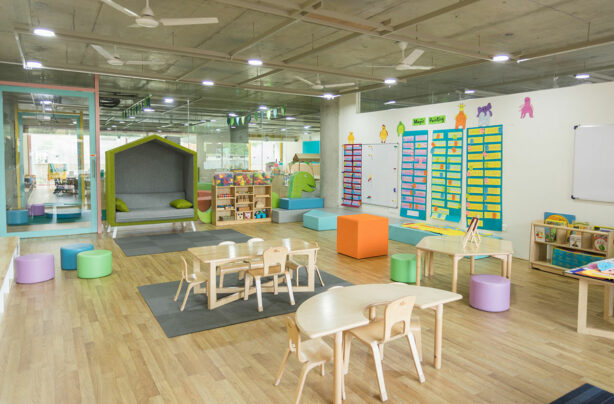
Daycare is an essential for many households with two working parents, but the benefits can go far beyond that.
Children who receive structured, quality care in their early years gain advantages that can help them thrive into elementary school and beyond.
The right daycare program does not simply fill a gap in the daily schedule. It sets the pace for how a child learns, connects with others, and grows into the years ahead.