
If you’re in your 40s or beyond and suddenly finding yourself wide awake in the middle of the night, you may be wondering why you’re suddenly unable to get a proper night’s rest.
A lot of moms hit a point where sleep just feels different. You fall asleep exhausted, only to wake up multiple times during the night.
Or, you make think you’ve gotten proper sleep, only to wake up feeling like you barely rested at all.
And while stress absolutely plays a role, because motherhood rarely slows down, there’s also a real biological reason behind it.

As you get older, your body naturally changes the way it sleeps.
The deep, restorative sleep you used to enjoy without effort starts to decrease, hormones shift, and the internal systems that help regulate your sleep become less reliable.
One recent AARP study found that most adults over 40 report at least one ongoing sleep issue, with many struggling to stay asleep through the night.
For moms, this can feel especially draining. You’re already balancing work, family responsibilities, mental load, and everyone else’s schedules.
When sleep starts falling apart too, everything feels harder. You may struggle with patience, focus, energy, mood, and even physical recovery.
Luckily, there are ways to improve your sleep, even in your 40s. Learn more about the reason for decreased sleep quality, and how to improve it, here.
Why the Pineal Gland Is Central to This Decline
The pineal gland is the primary source of melatonin, the hormone that tells every organ in the body when to enter its recovery phase.
The problem is that deep sleep naturally declines with age. Many women notice that they become lighter sleepers, wake more easily, or feel like they never fully shut off overnight.
Melatonin output is not constant across a lifetime. Its production peaks in childhood and begins a slow but steady decline from the third decade onward, with the rate accelerating after 40.
Even small sleep interruptions add up over time. Losing a bit of restorative sleep night after night can eventually leave you feeling constantly tired, foggy, or emotionally worn down.
In the course of aging, adults show decreased nighttime and average daily melatonin levels in blood plasma, along with a reduced amplitude of the hormone’s circadian rhythm.
That leads to a variety of potential negative consequences in a mom’s sleep cycle.
Getting to sleep gets more difficult. Nighttime awakenings tend to go up. Small changes like temperature regulation, immune function, and hormonal rhythms all start to alter.
This means that an otherwise healthy adult mom is suddenly faced with the challenge of dealing with less sleep, and sleep that’s less restful.
The pineal gland does not simply regulate when a person falls asleep. It signals the entire biological system when to shift from activity to restoration.
When that signal weakens, every organ that depends on timed recovery notices the difference.
How Sleep Loss After 40 Affects Cognition and Metabolic Health
The consequences of declining sleep quality in midlife extends well beyond simply feeling tired during the day.
A recent study found that adults who experienced significantly interrupted sleep in their 30s and 40s were more likely to perform worse on cognitive function tests, including memory, recall, and perceptual processing.
But, even more surprising, it wasn’t the length of sleep that affected test results.
Rather, the quality of sleep was what led to decreased cognitive function.
People who had more interrupted sleep in their 30s and 40s were more than twice as likely to show signs of cognitive decline ten years later.
For moms already juggling stress, irregular schedules, screen time late at night, or early wakeups with kids, this decline can feel even more noticeable.
Supporting the Pineal Gland with Epitalon Peptide
Standard approaches to sleep problems in midlife, which might include sedatives, melatonin supplements, sleep hygiene protocols, and more, address symptoms rather than the underlying decline in pineal output.
Research into pineal peptides has explored whether the gland’s own melatonin-producing capacity can be restored, rather than simply being supplemented in its decline.
It’s important to remember that the studies looking into boosting melatonin production are still fairly new.
But, results have been promising so far.
A recent study showed that elderly people with pineal gland functional insufficiency that started to take epitalon pepitide had an increase in nighttime melatonin levels with no reported side effects.
By stimulating melatonin synthesis and protecting pineal structure, epitalon peptide may counter the widespread circadian drift of aging, which may also improve immunity, metabolism, and neuroprotection.
Practical Measures That Reinforce Sleep Quality After 40
Biological changes in sleep after 40 can’t be entirely reversed through behavioral adjustments alone.
But, consistent habits significantly reduce their impact. These tips may help improve sleep quality for moms over 40:
- Morning light exposure within the first 30-60 minutes of waking reinforces the circadian signal that melatonin production depends on.
- A fixed wake time maintained across the entire week, including weekends, sets a sleep-wake rhythm more effectively than any other single habit.
- Limiting screens and bright indoor lighting about two hours before bed reduces the suppression of melatonin onset, which already occurs later with age.
- Avoiding alcohol in the evening, since it fragments sleep architecture and specifically reduces the REM sleep that becomes increasingly scarce after 50.
- Keeping the sleeping environment cool and completely dark supports the temperature drop and melatonin release that encourage deep sleep.
For moms, perfection isn’t realistic. Some nights are going to be interrupted. Kids get sick. Teenagers stay up late. Life happens.
But supporting your sleep consistently as best you can will still likely improve how deeply and peacefully you rest.
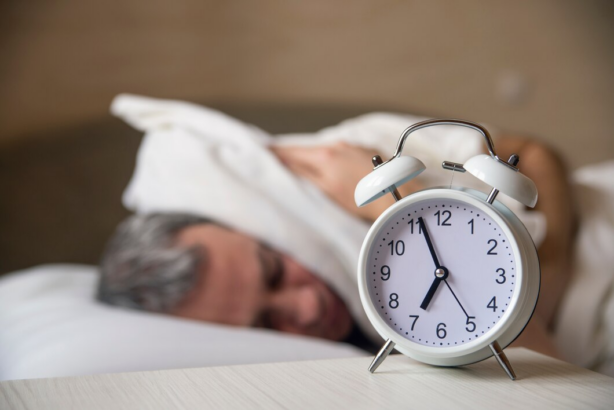
The decline in sleep quality after 40 is real, and while there’s no cure, the right combination of healthy sleep habits and supplements can help minimize the impact.
The encouraging part is that understanding the changes gives you a better chance of working with your body instead of fighting against it.
Better sleep after 40 may look different than it did in your 20s, but it’s still possible. And, it matters more than ever when you’re taking care of everyone else.