
Every new mom that decides to formula feed likely remembers the moment they first stood in front of a wall of options for the first time.
The formula labels all promise the world, the ingredient lists read like a chemistry exam, and your baby is hungry right now.
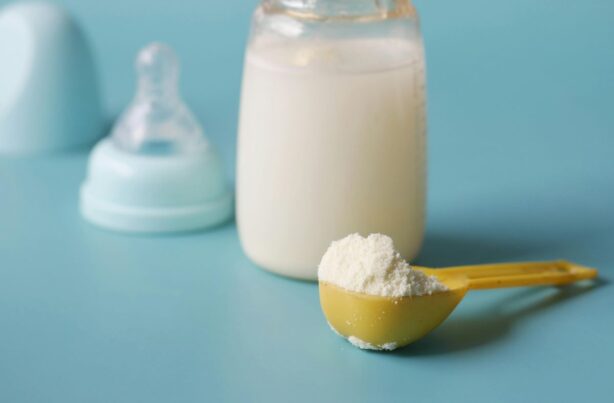
With unlimited options available, it can seem nearly impossible to decide which one might be best for your child.
But, choosing a formula doesn’t have to be overwhelming. It starts by learning what your baby actually needs, and what’s mostly marketing.
Use these tips to help you decide on the right formula for your baby to help them thrive.
Start With Your Baby, Not the Label
Before comparing brands, consider the specific needs of your baby.
Are they generally content after feeding, or do you notice fussiness, gas, or spit up? Does your family have a history of dairy sensitivities? Is your baby a newborn or already moving toward solids?
These questions can help narrow down your options quickly, because the best formula is the one your baby tolerates without issues.
If you’re not sure where to start, it can be very helpful to plan a chat with your pediatrician.
They can help track your baby’s growth, and flag anything that might call for a specialty product, such as a hypoallergenic or dairy-free formula.
While online research can help, nothing can replace the advice of your doctor when making your decision.
Why More Parents Are Choosing European Formulas
Over the past few years, a growing number of American moms have started feeding their babies European formulas.
And, if you ask them why, the reasons for this are generally the same from mother to mother.
European regulations set strict limits on added sugars, require that a large share of carbohydrates come from lactose, and prohibit a number of additives that are still permitted elsewhere.
Organic certification in the EU is also more tightly controlled, which appeals to parents who want to know exactly what is in the tin.
None of this means that domestic options are a bad choice. It simply means that many parents feel reassured by the European approach of fewer ingredients, more lactose, and rigorous organic standards.
If clean labels matter to you, European brands are worth a closer look.
HiPP: A Gentle Classic From Germany
HiPP has been making baby food in Germany for more than 120 years, and has become something of a household name among parents who favor European formula.
Many of its recipes include prebiotics and probiotics, which a lot of moms appreciate when their babies struggle with sensitive tummies.
The brand also offers specialty lines for babies who need extra digestive support, as well as certified organic formula options.
Parents in North America who want to explore the full range can browse the HiPP formula collection at Organic Formula Europe to see the different stages and varieties laid out clearly by age and need.
Kendamil: A Creamy Newcomer From Britain
For moms looking for something different than the standard skim milk and palm oil formula, Kendamil is a brand worth considering.
Made in the English Lake District, it is made using whole milk rather than skimmed milk, which gives it a naturally creamy taste that many babies seem to prefer.
It also skips palm oil entirely as a fat source, and sources its DHA from algae instead of fish oil, a detail that can be important to families with a history of allergies.
Moms who are curious about the whole milk approach may want to check out the complete Kendamil formula collection and compare stages side-by-side.
What to Watch For When Switching Formulas
If you’ve decided to try a new formula for your baby, the most important thing to remember is to introduce it gradually.
A sudden change can cause fussiness and potential stomach upset, and that’s not fun for you or your little one.
Many parents mix the new formula with the old one over several days, slowly shifting the ratio.
During that time, keep an eye on things like:
- Changes in stool consistency or frequency, which are normal at first but should settle within a week or two.
- Unusual fussiness, rashes, or vomiting, which are reasons to pause and call your pediatrician.
- Feeding amounts and wet diapers; simple, everyday signs that your baby is eating enough.
Also, make sure to read the directions before mixing your new formula.
Different formulas may have different ratios of formula to water, and European formulas specifically often use slightly different mixing instructions and water temperatures than what is printed on US tins.
Always follow the directions for the formula you’re actually using to ensure your baby is getting the nutrition they need.

Trust Yourself
In the end, it’s important to remember that you know your baby better than anyone.
Your pediatrician can help provide crucial medical advice, and research ensures proper nutrition, but you’re the one who sees how your little one sleeps, feeds, and smiles every single day.
Whether you decide to use a hypoallergenic formula, a European goat milk option, or a standard North American brand, the right formula for your baby is the one that lets them grow and thrive.
Fed is best, and you’re the only one that can truly determine the best option for making that happen.