
Every child has their own personality, and it often becomes especially noticeable when it’s time to start preschool.
Some children can’t wait to meet new friends and explore every corner of the classroom.
Others prefer to hang back, watch what’s happening, and take their time before joining in.
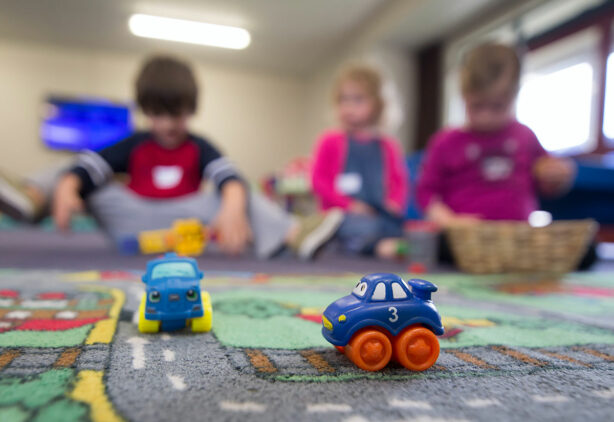
If your child is naturally quiet, sensitive, or slow to warm up to being around other kids, you might worry that preschool will be overwhelming, or that they’ll struggle to fit in.
The good news is that these personality traits don’t mean your child won’t be able to thrive in preschool.
In fact, trained staff at a top preschool in Salt Lake City mention that quiet children will generally start to flourish once they feel comfortable in their surroundings.
Finding a preschool program that understands children’s different personality traits and learning styles can make all the difference.
Being Quiet Doesn’t Mean Being Unhappy
Parents often wonder if their quiet child is falling behind socially simply because they aren’t the first to join a game or strike up a conversation.
But, being quiet doesn’t automatically mean that your child is anxious, unhappy, or lacking confidence.
Many children prefer to observe before participating.
They take in the classroom, learn the routines, watch how other children interact, and build confidence before stepping in themselves.
That kind of observation is part of learning. While it may not look as active as jumping into group play, it’s helping your child understand their new environment in a way that feels safe to them.
Sensitivity Can Be a Strength
Some children experience the world a little more intensely than others.
They may react a little more to loud noises, crowded spaces, or changes in routine.
They often pick up on other people’s emotions and can become overwhelmed more easily during busy transitions.
While these traits can make the first few weeks of preschool more challenging, they also give your child some important strengths.
Sensitive children are often more thoughtful, caring, observant, and empathetic.
Rather than trying to change their natural tendencies, a supportive preschool can help your child build confidence, while still respecting who they are.
A good preschool teacher understands that some children need a softer introduction to the preschool experience.
Some Children Simply Need More Time
Not every child settles into preschool during the first week, or even the first month.
Some children simply need time to feel completely comfortable in their new environment.
They may stay close to their teacher at first, watch other children before joining activities, or have emotional outbursts at drop-off, even though they enjoy the rest of the day.
Keep in mind that this is completely normal.
Building trust takes time, especially for children who may be more naturally cautious in new situations.
Trying to rush the process doesn’t help.
In fact, pushing your child to “go make friends” or “join the group” over and over can actually make them feel more self-conscious.
Instead, let your child express themselves during the transition and stay patient and consistent throughout the process, so that their confidence can develop naturally.
Small Routines Help Big Feelings
Children who are a little more quiet, sensitive, or cautious often feel more secure when they know what to expect throughout the day.
A simple preschool routine can help them settle in more quickly, because it removes the fear of the unknown.
Start by creating a simple morning routine before preschool, and talk through each step with your little one.
getting dressed, eating breakfast, packing their backpack, driving to school, saying goodbye
reakfast, shoes, car, hug, teacher, play, and pickup. Keep it short. Too much explaining can sometimes make a child more anxious.
A small goodbye routine can help too. One hug, one sentence, one wave. Then leave.
Long goodbyes can actually make your child more resistant to you leaving, even when coming from a place of love.
A Good Teacher Will Understand Children’s Differences
Keep in mind that the goal of preschool should never be to turn a quiet child into an outgoing one.
Rather, the goal should be to help your child feel safe in new environments, let them build relationships, and help them develop new skills in a fun way.
A quality preschool focuses on helping children feel safe, build relationships, develop new skills, and enjoy learning. Those milestones can look different for every child.
A quiet child may prefer listening to others answer questions, rather than answering themselves.
A sensitive child may need a little more support when the classroom gets noisy, or when a special event changes the usual preschool routine.
A slow-to-warm-up child may prefer playing one-on-one with a classmate, rather than joining a bigger group.
None of these are problems that need to be fixed.
Instead, focus on whether your child is showing signs that they’re comfortable in their new environment.
Is your child becoming more comfortable at drop-off? Are they talking about their teacher at home? Have they started exploring new activities or mentioning classmates?
Those small changes often signal that your child is settling in successfully.
What You Can Say to Help Your Child
Parents naturally want to support their children, but the language we use can shape how they see themselves.
Instead of saying, “You’re just shy,” try describing what’s actually happening.
You might say, “You like to watch before you join in,” or “New places take a little time to feel comfortable.”
This acknowledges your child’s feelings without making them feel like being quiet is something they need to fix.
It’s also helpful to practice simple phrases they can use at preschool, such as:
- “Can I play too?”
- “Can you help me?”
- “Can I watch?”
- “I need a break.”
Having a few familiar requests ready can give children confidence when they’re unsure what to say.

When children first start preschool, it’s easy to focus on whether they’ve made new friends, or joined every activity.
But, those aren’t the only signs that things are going well.
Maybe your child cries less at drop-off than they did last week.
Maybe they proudly bring home a painting, mention their teacher during dinner, or tell you about a game they watched before deciding to join in.
These are all important milestones.
Confidence usually grows little by little, especially for children who are naturally quiet, sensitive, or cautious.
If you ensure your child has a good teacher, a regular routine, and your patience and understanding, they’ll soon start to flourish in their new environment.
And, that sets the stage for a lifetime love of learning and building new friendships that will help your child eventually become a confident and successful adult.