
If you’ve ever watched somebody knitting and thought that you’d like to try it, you’re not alone.
Knitting is one of those hobbies that offers real, tangible results. With nothing more than a pair of needles, yarn, and a pattern, you can produce something that will be loved for years to come.
But, while knitting looks simple on the surface, it does require some knowledge to do well.
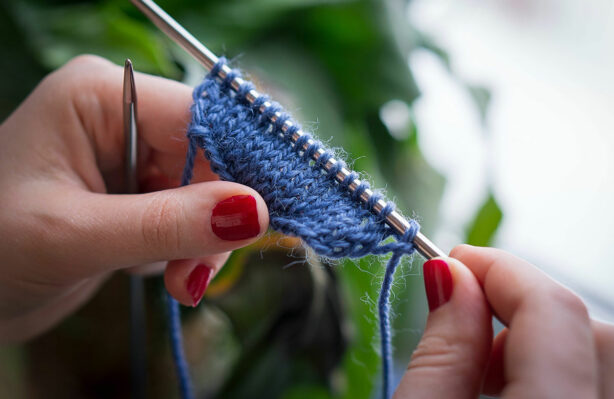
For beginners, the hardest part is often not learning how to knit.
Instead, it’s figuring out what needles to buy, which yarn to use, how to understand a pattern, and whether you’re making a mistake as you learn new stitches.
That’s where a good beginner knitting kit can help.
The right kit will give you materials that work well together and a manageable first project, so you can spend time learning the basics of knitting knowing you have everything you need for your creation.
Why Your First Knitting Project Matters
Your first project can have a big effect on whether you enjoy knitting enough to keep going.
Start with something too complicated, and you may spend your first few evenings trying to understand unfamiliar stitches and undoing rows of mistakes.
But, if you start with a simple project, you can focus on learning how the needles, yarn, and stitches work together.
This doesn’t mean your first project needs to be boring. It simply needs to be achievable.
A simple scarf, cowl, dishcloth, or other small project can teach you the basics of knitting, without requiring you to learn several new techniques at once.
You’ll get a chance to practice keeping your tension reasonably even, recognizing your stitches, following a pattern, and correcting simple mistakes.
Once those skills become familiar, you can start adding more complicated techniques and move up to more complicated projects.
Benefits of a Good Beginner Knitting Kit
The benefits of a good beginner knitting kit are more valuable than simply giving you an easy way to get started with knitting.
The right kit will also provide these three key benefits:
Removes Decision Fatigue
When you walk into a craft shop or browse an online knitting website, you’ll immediately face choices about yarn fibers, needle materials, needle sizes, patterns, and accessories.
For someone brand new to knitting, all that variety can be more paralyzing than exciting.
A good knitting kit gives you the tools you need, without having to make endless decisions.
Instead of leaving you to choose everything from scratch, you get a combination of tools, materials, and instructions that leave you with one achievable project.
Then, as your skills and knowledge grow, you can branch out into more customizable creations that let you start to make your own choices on the best tools and materials.
Matches Materials to the Project
One of the most common mistakes that beginner knitters make is pairing the wrong yarn with the wrong needles, or choosing a pattern better suited to someone with more experience.
A well-designed kit eliminates the chances of that happening, since every piece of the kit is designed to work together.
Many kits also have different experience levels listed, so that you can choose one that’s best suited to your skill level.
A bundle that includes everything beginners need to start knitting is a great way to start to build your knitting skills and confidence.
Focuses on Fundamentals
When you first start to learn how to knit, you likely want the experience to be as enjoyable as possible.
A good beginner kit will help make that possible, by using straightforward stitch patterns, medium-weight yarns, and projects that let you practice knit and purl stitches without too many complicated extra steps.
Remember that knitting skills are developed through practice. Choosing a simple kit for your first project will help you learn in a fun and inspiring way.
Choosing the Right Beginner Knitting Kit
When deciding on your beginner kit, keep in mind that not every kit is necessarily beginner-friendly.
Here are three things to keep in mind when deciding on your first knitting kit:
Choose the Project Before You Buy the Tools
It can be tempting to jump into your knitting experience by buying a set of knitting needles or a basket full of beautiful yarn.
But, if you’re completely new to knitting, it makes more sense to decide on your project before you do anything else.
Think about what you would actually enjoy making. A scarf is a straightforward choice, but you might also prefer a small home accessory, or a simple hat.
Garments such as sweaters should usually be saved for the future, unless you find a particularly beginner-friendly pattern.
They involve more sizing, shaping and construction, which means there’s simply more to keep track of as you’re trying to learn.
Choosing a project first also makes it much easier to choose the right yarn and needles. You won’t have to guess which materials will work together, because the pattern or kit should tell you exactly what you need.
Pay Attention to the Yarn
Yarn choice makes a bigger difference than many beginners realise.
When you’re learning, you want to be able to see your stitches clearly, so that you can spot mistakes quickly.
Smooth yarn in a light or medium colour is generally easier to work with than very dark, fuzzy, or loosely spun yarn.
Some textured yarns can make it difficult to tell where one stitch ends and the next begins. That can be frustrating when you’re still learning what each stitch should look like.
You’ll also want to consider the weight of the yarn.
Medium-weight yarn is often a good choice for beginners, because the stitches are large enough to see without making the finished project unnecessarily bulky.
While there’s no question that there are plenty of beautiful and unique yarn choices available, your first project should include a basic yarn that makes learning easier.
Look for Clear, Beginner-Friendly Instructions
A knitting pattern can look intimidating when you don’t understand the abbreviations yet.
Terms that are completely familiar to an experienced knitter can seem like another language when you’re looking at your first pattern.
For that reason, instructions matter just as much as the physical supplies in a beginner kit.
Look for patterns that explain basic techniques clearly, rather than ones that assume you already know how to interpret common knitting abbreviations.
A kit designed specifically for beginners should guide you through the project, not just give you a pattern and expect you to figure everything out yourself.
If you’re choosing a kit online, look at the description carefully. Find out what level of experience the project is intended for, and whether the instructions are clear and readable.
Common Beginner Knitting Mistakes
No matter how carefully you follow the instructions in your kit, it’s inevitable that you’ll make some mistakes when you start knitting.
You might drop a stitch, accidentally add one, knit when you were supposed to purl, or realize after several rows of knitting that something doesn’t look quite right.
None of that means you’re bad at knitting. In fact, learning how to notice and fix mistakes is an important part of becoming comfortable with the process.
But, keep these common beginner mistakes in mind, so that you can bounce back from them rather than getting discouraged.
Starting Too Big
Just as a complicated knitting project can end up being more discouraging than inspiring, so can a project that’s too large.
A cozy blanket may seem like a straightforward first project, but it can quickly become repetitive, and the large size can make it physically awkward to work with.
Smaller projects are a better way to help you build your skills and give you a sense of accomplishment, rather than leaving you fatigued.
Trying To Develop New Skills Too Quickly
Once you’ve started to master the basics, it can be common to think that you should immediately start learning newer and more complicated techniques.
But, the reality is that repeating those basic stitches is what you need to develop your muscle memory and master some of the subtler essentials of knitting.
With the right starter project, you’ll be able to stay engaged and build your basic skills, without getting overwhelmed trying to master complicated techniques.
Blaming Yourself For Poor Materials
If your first attempt at knitting feels frustrating, take a look at your supplies before deciding that it isn’t for you.
Some yarn varieties are harder to work with than others. Needles that are too slippery or too large for the yarn can make basic stitches feel awkward. A hard-to-read pattern could leave you confused.
Beginners sometimes assume these problems mean they aren’t picking up the skill quickly enough.
But, often, the materials are simply making the learning process harder than it needs to be.
A good beginner kit is often the easiest way to avoid this frustration.
When the yarn, needles, and pattern are designed to work together, you won’t have to troubleshoot issues while you’re still learning the basics.

Your second project is a good opportunity to build on what you already know rather than starting from scratch.
If you made a simple scarf, you could try knitting a hat in matching colors.
If you’ve only worked with the knit stitch, you could introduce the purl stitch and try ribbing.
If you’ve followed a very basic pattern, you could choose one that introduces a few common abbreviations.
Adding one new skill at a time makes it easier to see how much you’ve learned, without making the next project unnecessarily difficult.
As your skills grow you may eventually want to try cables, colorwork, socks, sweaters, or more complicated patterns.
The important thing to remember, though, is that choosing the right kit to start with can help ensure you make that progress.
By making knitting feel approachable, you get the chance to practice the basics, without making the first few steps harder than they need to be.
With the right beginner knitting kit, you get the tools and materials you need to build a love of knitting that may just end up lasting you for a lifetime.