
Open floor plans are an appealing design choice for a sleek, modern look.
Walk into most modern houses and you’ll likely see a kitchen that flows into the dining area, and from there into a family living room.
It’s a great look, and perfect for easily moving from area to area. Yet, that wide open space can bring its own unique design challenges.
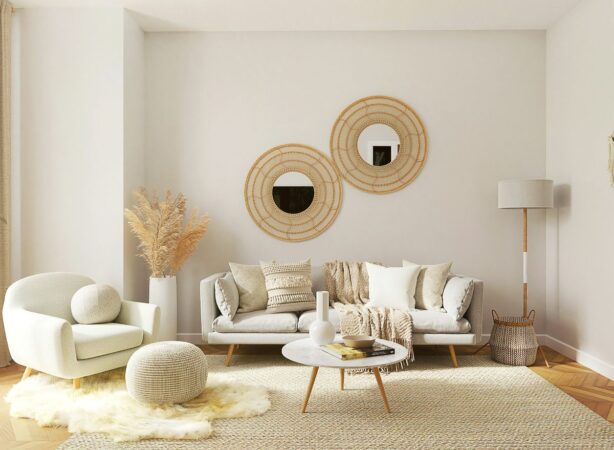
Those open spaces can sometimes feel cold and impersonal. With no clear boundaries within the space, your open floor plan may seem more like a warehouse than a family home.
The good news is that correcting that problem is surprisingly easy!
With the right area rugs, those wide-open spaces will become cozy, functional, and inviting. And, you don’t need to hire an interior designer to do it.
Read on to see how easy it can be to use area rugs to turn your open floor plan into the inviting, family-friendly space of your dreams.
Here’s What You’ll Learn:
- Why Open Floor Plans Need Area Rugs
- How to Define Spaces with Rugs
- Choosing the Perfect Size Rug
- Choosing Colors and Patterns for Your Rug
- Common Mistakes to Avoid
Why Open Floor Plans Need Area Rugs
Open floor plans are hugely popular when it comes to interior design, and with good reason!
They make a house feel bigger and more spacious, improve natural light, and let people move from one area to another with ease.
In fact, 86% of home buyers prefer a floor plan with an open kitchen and dining room!
But, as appealing as an open floor plan can be, it can also be hard to decorate.
Without walls to define separate areas, furniture often looks misplaced.
Sound echoes, and conversations lack intimacy. The result can feel unfinished and uninviting.
Luckily, area rugs can solve these problems, by helping to turn one large, open space into multiple cozy living areas.
Not only are they a great way to visually divide a space, they soften sound to reduce echoing, and add warmth and texture to your room.
Best of all, they’re a great way to give your house personality, letting you choose rugs that match your furniture and decor to show off your style!
How to Define Spaces with Rugs
The most important thing to remember when planning the furniture and decor for an open floor plan is that the space can still be divided into “rooms,” even without walls.
That’s where area rugs can be the secret weapon in your interior design arsenal.
By visually catching the eye and defining a space, the right area rug can help separate your home into different areas.
In most open floor plan designs, these are the areas you’ll want to create:
Living Room
The rug for your living room area should be large enough to anchor all of your main furniture pieces.
Make sure the front legs of your sofa, chairs, and coffee table are all sitting on the rug.
This instantly creates a defined conversation area that visually separates itself from the rest of the space.
Dining Room
Your dining room rug should be big enough to fit under your dining table with at least two feet of rug extending beyond the table on all sides.
This makes it easy to pull out chairs without them catching on the rug edge.
Kitchen
While often overlooked, the kitchen can often benefit from a smaller rug as well.
Consider adding a runner or mat in front of the sink or your kitchen island.
It will help make working in the kitchen more comfortable, while also tying the kitchen visually to adjoining areas.
Pro Tip: Consider using rugs in coordinating colors or patterns, to give your open floor plan a nice flow while still keeping your different areas distinct.
Choosing the Perfect Size Rug
One of the most common design mistakes when choosing area rugs for your open floor plan is selecting a rug that is too small.
A rug that floats awkwardly in the middle of a large space undermines the entire design, and won’t give you the cozy, comfortable feel you’re looking for.
Luckily, there are a few easy rules you can follow to help you choose the right size rug.
The 8×10 Rule
For most open floor plan living areas, start with an 8×10-foot rug.
This is large enough to anchor a standard-sized sofa and coffee table arrangement, while still leaving plenty of room for traffic flow around the edges of the rug.
Bigger Is Better
If you have enough space, always go bigger rather than smaller. Oversized rugs make rooms feel more luxurious and pulled together.
As long as your rug isn’t touching the walls of the room, it can be as big as you like and will still look great in the space.
Layer It Up
Sometimes a single large area rug just isn’t practical. In that case, consider using multiple smaller rugs in your space instead.
Layering rugs in a room can add a fun and unique look to the space. Start with a large base rug, and then layer a smaller one overtop.
Just make sure they look good together visually. Think similar colors and complementary patterns.
Choosing a Color and Pattern for Your Rugs
One of the most fun things about adding area rugs to your open floor plan is choosing the perfect design for your unique style.
Here are a few tips on choosing the perfect rug to suit your home:
Neutral Foundations
If you’re worried about rug colors clashing with one another, start with a neutral rug in cream, gray, or beige.
Neutral rugs work with any decor, and you can then add accent colors with pillows, artwork, and accessories to add visual interest to the living space.
Pattern Mixing
Combine patterns carefully by balancing scale. Too many bold patterns will look chaotic instead of calm.
Instead, try a large pattern on your area rug, a medium pattern on throw pillows, and a small-scale accent pattern on accessories like lamp shades and decor items.
Color Bridging
Use your area rug to bridge colors between different zones in your open space.
If your kitchen has blue accents and your living room has green, choose a rug that incorporates both colors for visual harmony.
Common Mistakes to Avoid
While area rugs can be a great way to enhance your home’s look and feel, using them the wrong way can have the opposite effect.
Here are some common mistakes to avoid when planning your room’s look:
Tiny Rugs
Small rugs in a large room simply don’t work. Rather than anchoring the room and adding coziness, it can actually make the room feel smaller and more fragmented.
Pushing Furniture Against Walls
You don’t have to push all your furniture against the walls just because you have an open floor plan. Pull things into the center of the space and let your rug define the boundaries.
Blocking Traffic Flow
Avoid rug placements that create unnatural walking patterns. Your rug shouldn’t force people to walk awkward paths to get from one place to another. Flow should be natural and intuitive.
Boring Rugs
Texture is your friend. Flat, uninteresting rugs miss an opportunity to add depth and interest to the room. Look for rugs with fun textures, like a chunky weave or raised patterns.
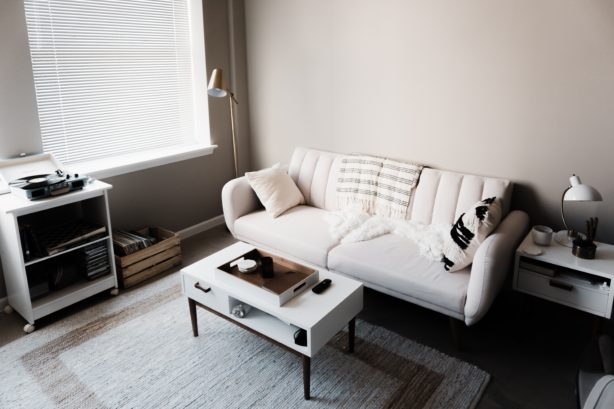
Open floor plans don’t have to feel cold, impersonal, or empty.
With the strategic use of area rugs, even the largest and most minimal layout can feel cohesive, comfortable, and inviting.
Start with a single, well-sized rug for your main living area to anchor all of your key furniture pieces. Then, add rugs as desired to define other zones, like dining or kitchen areas.
The right rug not only defines spaces, it also adds warmth, texture, and design continuity throughout your home.
And that means enjoying the best of both worlds: an open and airy floor design perfect for traffic flow and entertaining, that still feels cozy and inviting!