
Walk into a Reggio-inspired preschool classroom, and you’ll notice it feels different right away.
Instead of rows of desks facing a chalkboard, you’ll see children gathered around tables, working with clay, sorting colored shapes, or building towers with blocks.
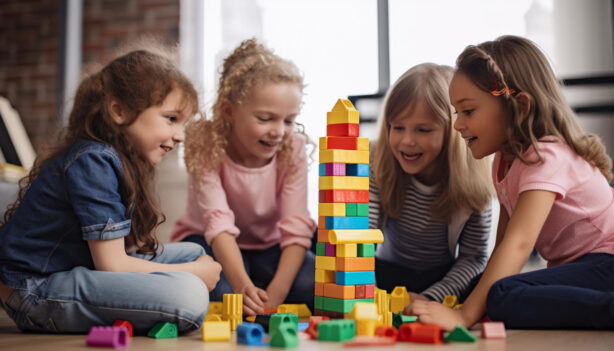
This interactive approach to early childhood education started in Reggio Emilia, Italy, after World War II, and over the years it’s spread to classrooms all over the world.
The concept encourages learning through play, exploration, creativity, and hands-on experiences, with teachers guiding children as they follow their natural curiosity.
If you think the Reggio approach may be a good fit for your child, come learn more about the benefits it may offer your child.
The Environment Acts as the Third Teacher
One of the first things you will hear in Reggio education is that the environment itself is a teacher.
Schools following the Reggio approach believe the classroom should be an active part of your child’s learning experience.
Experts at a top daycare in Coral Gables explain that Reggio-inspired spaces are often filled with natural light, open shelves with real materials, and displays of children’s work at eye level.
This type of thoughtful design encourages kids to explore, ask questions, solve problems, and make choices independently, helping them build confidence and curiosity.
When your child can touch, move, and explore materials freely, it helps inspire creativity while encouraging collaboration and deeper thinking.
Because the environment changes when your child’s interests do, it inspires curiosity and supports meaningful, child-led learning every day.
Children Lead Their Own Learning
In a traditional preschool, a teacher plans the day, and children follow along. In a Reggio-inspired room, it works the other way around.
Teachers watch and listen carefully to figure out what children are already interested in, and then help kids to build on those interests.
For example, if a group of children becomes curious about shadows during outdoor play, a Reggio teacher might set up a light table, or bring in flashlights and objects for the children to explore.
Your child isn’t just absorbing information; they are generating questions and looking for their own answers, with support from the adults around them.
This approach encourages critical thinking, creativity, problem-solving, independence, and self-confidence, as children learn at their own pace.
Projects Go In-Depth
If you’ve started to look into the Reggio system, you may have heard the term “project-based learning.”
Essentially, instead of touching on many topics briefly, your child is able to spend weeks or even months exploring one idea from different angles.
In the Reggio approach, this flexible way of planning is known as progettazione.
In practice, this is what one of these in-depth projects might look like:
- Children notice worms after a rainstorm on the playground.
- They start asking questions: Where do worms live? What do they eat? Why do they come out when it rains?
- Teachers document the questions and bring in books, magnifying glasses, and soil for exploration.
- Children draw worms, tell stories about them, and create a small garden to observe them over time.
Eventually, your child’s project will have let them explore aspects of science, art, language, problem-solving, and critical thinking in a fun and interactive way.
And, because the learning is driven by your child’s own curiosity, they’re often more engaged and excited to keep exploring.
Documentation Makes Thinking Visible
One of the more unexpected aspects of a Reggio-inspired preschool is how much documentation goes on.
Teachers take photos, write down what children say, and display questions, drawings, and projects on the walls.
This helps them understand how a child is approaching a question, what they’re curious about, and how their ideas are developing over time.
That knowledge then lets the teacher progress the learning in a way that’s appealing to your child.
If a group of children keeps returning to the same question or idea, the teacher can incorporate new materials or experiences that build on what’s already happening.
Additionally, when your child sees their own work documented, it shows them that their ideas matter and that the process of learning is just as important as the end result.
Finally, for you as a parent, documenting your child’s activities can give you a clear view of what your child is actually doing and thinking each day, letting you follow along with their growth.
Relationships Are Built Into the Structure
Relationships are at the heart of the Reggio approach, which believes learning is a social process that happens through meaningful interactions with others.
Children are encouraged to collaborate with classmates, share ideas, solve problems together, and learn from different perspectives, helping them develop communication, empathy, and teamwork skills.
Teachers build strong relationships with each child, and children often stay with the same teacher for more than a single year, a practice called “looping.”
This gives your child time to build real trust with an adult outside their own home, as the teacher helps guide future learning experiences.
As a parent, you’re also considered an essential member of the learning community.
You might be invited to share your skills, your culture, or your work with the classroom, or stay involved in ongoing learning projects.
These supportive relationships between children, teachers, families, and the classroom environment create a sense of belonging and trust that helps build your child’s self-confidence and love of learning.
Finding the Right Fit for Your Child
While some preschools may claim to follow a Reggio approach, some may not incorporate every aspect of Reggio into their curriculum.
If you’re considering a specific program, here are a few key things to look for:
- Are children’s questions and ideas displayed on the walls?
- Do teachers spend time observing before jumping in to help?
- Is there a variety of open-ended materials, such as clay, natural objects, and loose parts like buttons, fabric, and wire, ?
- Are projects ongoing, or does the theme change every week?
Asking these questions will help you tell the difference between a classroom that truly uses the Reggio philosophy and one that may only incorporate one or two ideas.
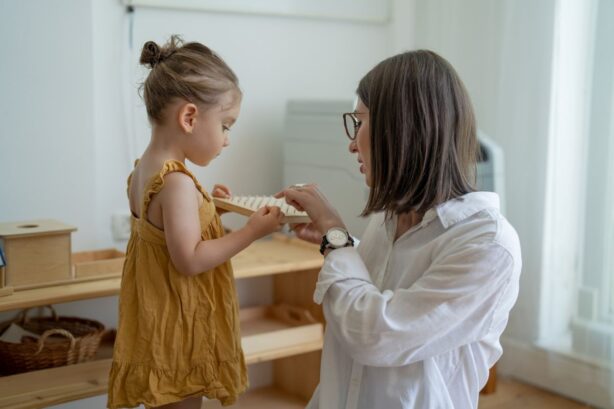
A Reggio-inspired preschool can do much more than simply prepare your child for kindergarten.
It can help them develop skills they’ll use throughout their lives, including curiosity, problem-solving, creativity, and the confidence to ask questions.
As children learn to work with others, explore new ideas, and keep trying when something doesn’t come easily, they’re building a strong foundation for future learning.
If you’re looking for a preschool that values your child’s curiosity and encourages them to learn through exploration, a Reggio-inspired program may be the perfect choice for you and your little one.